The Playground
Timeline: 10-12/2022
Category: Virtual Reality, Game Design
Role: Group member (collaborate with Yuan Cao)
Tools & Technology: Unreal Engine 5, VR Headsets, Adobe Photoshop, Cinema 4D, Virtual Environment
Venue: New Forms in Media class
By investigating urban myths about missing children and the childhood trauma of abuse or kidnapping, we created The Playground, a virtual reality experience that explores a small town with dark secrets. Players can freely wander through the "playground" scene, uncovering the narrative through clues scattered across the facilities.
This project was developed for the class New Forms in Media, combining 3D modeling, virtual environment building, game design, and interactive storytelling. While we originally planned to add more interactive elements, such as hint-based props, time constraints limited us to a test version that allowed participants to experience the environment using a VR Oculus headset.
Documentation (2022)
Design
The game explores the dark theme of temptation as a manipulative force, divided into three critical chapters that reflect different forms of lures aimed at children. Each chapter emphasizes unsettling and eerie elements to create an atmosphere of dread and suspense. The gameplay follows a map exploration principle, encouraging players to uncover hidden narratives by interacting with their surroundings.

Concept Arts


The facilities are inspired by Egon Møller-Nielsen's abstract sculptures in a surreal style, blending elements of childhood innocence with a subtly creepy undertone. This design choice adds a layer of unease to the seemingly playful environment, enhancing the game’s dark and eerie atmosphere.
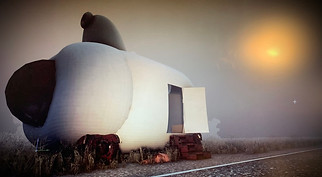
Chapter 1: Food Cart (Food Temptation)
A seemingly harmless food cart tempts players with treats, but as they explore, its cheerful appearance hides unsettling clues of danger.


Chapter 2: Mannequins and Slide (Entertainment Temptation)
Lifeless mannequins and a large slide evoke the illusion of fun. Players interact with these elements, uncovering disturbing narratives that reveal the darker truth behind the seemingly joyful setting.

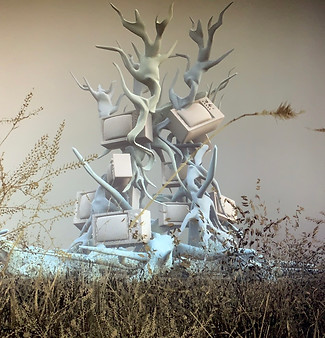
Chapter 3: Television (Visual Temptation)
A looming "television monster" dominates the final chapter, hidden in a secret tunnel that players must discover by following clues. The screens display distorted visuals and eerie sounds, drawing players into a critical reflection on the media's power to captivate and manipulate young minds.




Reflection
Due to time constraints, the project focused on building the foundational virtual environment, leaving limited scope for implementing additional interactions. Conceptually, the design aimed to include more interactive elements, such as readable posters to provide narrative context, small props like keys to enhance exploration, and NPCs to guide players through the experience, to add greater narrative depth and engagement.
Horror games inherently engage with the psychology of fear, offering a unique platform to study emotional embodiment and trauma. Given more time, the project would benefit from a deeper exploration of how environmental design and interactive elements evoke fear responses and how these responses could be tied to broader research on trauma.